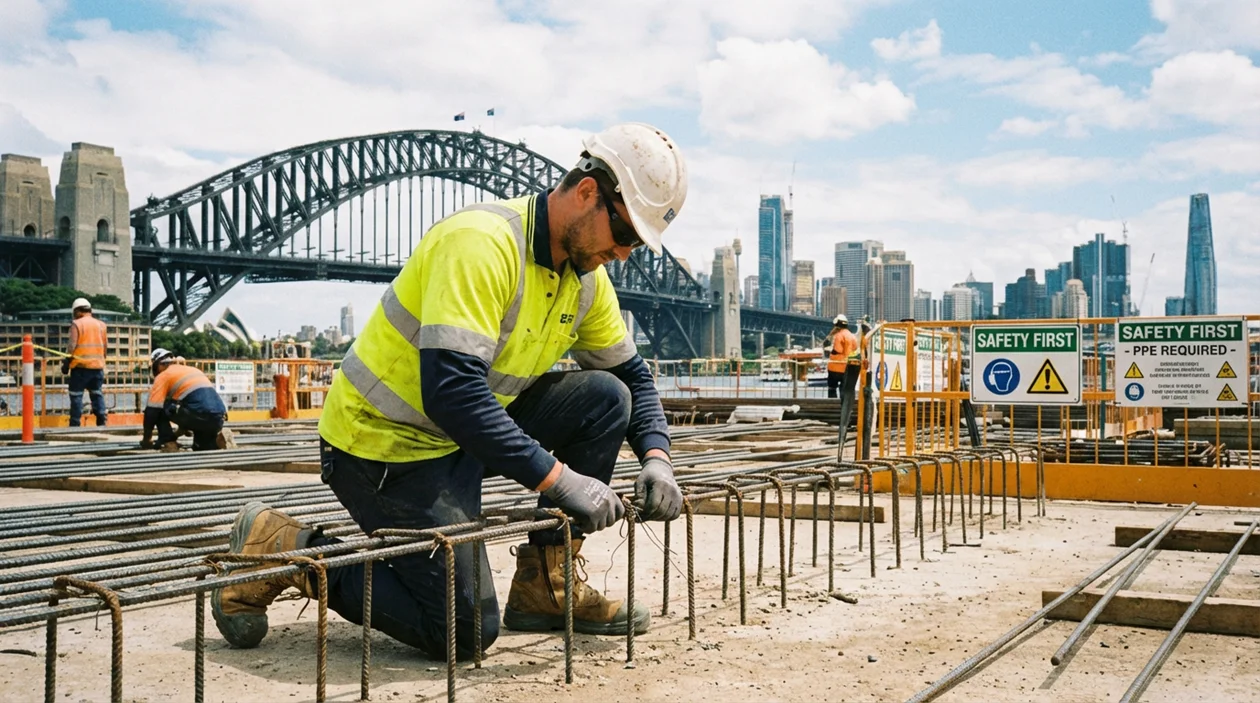
Working with rebar presents two primary dangers: impalement from exposed vertical bars and trip-and-fall hazards from horizontal mats. The most critical safety protocol is to guard all protruding rebar with protective caps, covers, or by bending them. This guide provides actionable checklists and quick reference charts to ensure your job site is safe, compliant with Australian workplace safety standards, and built to last.
How to Protect Workers from Rebar Hazards: A 5-Minute Safety Checklist
To protect workers, you must identify and neutralise the two main rebar hazards: impalement and tripping. This is achieved by covering all protruding ends with protective caps or troughs and ensuring clear, designated pathways across rebar mats. Use this checklist daily before work begins.
The Rebar Safety Checklist
Vertical Rebar:
- Are ALL protruding rebar ends that workers could fall onto guarded with protective caps?
- Are the caps rated for impalement protection (e.g., steel-reinforced)?
Horizontal Rebar (Mats/Footings):
- Are designated, marked walkways established across the rebar mat?
- Is the area free of tripping hazards like tie wires and overlapping bars?
Material Handling & Storage:
- Is rebar stored on a level, stable surface away from high-traffic areas?
- Are workers using proper PPE (gloves, steel-toed boots) when handling rebar?
Try This Now
- Walk the Site: Take 5 minutes and walk the entire work area with this checklist.
- Cap 10 Bars: Immediately find and cap the first 10 unprotected vertical bars you see.
- Flag a Pathway: Use brightly coloured tape to mark one safe walkway across a rebar mat.
Common Mistakes to Avoid
Mistake: Using non-impalement-rated “mushroom” caps.
Solution: Only use steel-reinforced caps or wooden troughs designed for impalement protection.
Mistake: Leaving cut tie wires on the ground.
Solution: Mandate that all cut wires are immediately placed in a scrap bucket.
What Are the Australian Safety Rules for Rebar?
Safe Work Australia’s primary rule for rebar mandates that all protruding reinforcing steel onto which employees could fall must be guarded to eliminate the hazard of impalement. This is a non-negotiable requirement on all Australian construction sites under the Work Health and Safety Regulations.
Workplace Compliance Quick Reference Table
| Standard | Requirement | In Plain English |
|---|---|---|
| WHS Reg 291 | Guard protruding rebar | If someone can fall on it, it must be capped or covered |
| WHS Reg 78 | Working at heights | If working near an edge 2 metres or more above a lower level, you need fall protection |
| WHS Reg 203 | Housekeeping | Keep work areas clear of scrap and debris to prevent trips on off-cuts or tie wires |
Key Takeaway: Compliance isn’t complicated. If it’s sticking up and someone can fall on it, cover it. Your entire workplace safety compliance strategy for rebar starts with this one simple principle.
Self-Check Method: Ask yourself: “If a SafeWork inspector walked on-site right now, would they find a single unguarded, vertical rebar?” The answer must be “no.”
Troubleshooting Guide
Problem: Rebar is lying on the ground before the pour.
Solution: Use concrete plastic “bar chairs” to elevate the rebar mat to the correct height within the slab. Rebar on the bottom does nothing for tensile strength.
Problem: Bars are not overlapped enough.
Solution: You must meet the minimum lap splice length (see table). If too short, the tension force cannot be transferred, and the concrete will crack.
Final Safety Action Steps
This guide provides the essential tools for immediate implementation:
- Use the Safety Checklist every morning before work commences
- Reference the Compliance Table to ensure you meet Australian safety standards
- Apply the Installation Cheat Sheet for proper rebar placement and coverage
- Implement the “Try This Now” actions to create immediate safety improvements
Remember: effective rebar safety isn’t about memorising regulations, it’s about establishing consistent daily practices that protect workers and ensure quality construction. Keep these checklists handy, train your team regularly, and make safety checks a non-negotiable part of your routine.
The difference between a safe site and an accident waiting to happen often comes down to a few uncapped bars or an unmarked pathway. Take the five minutes to walk your site with this guide, and you’ll prevent injuries whilst maintaining compliance and quality standards.